
Form 124 Explained: The New Investment Declaration That Replaced Form 12BB

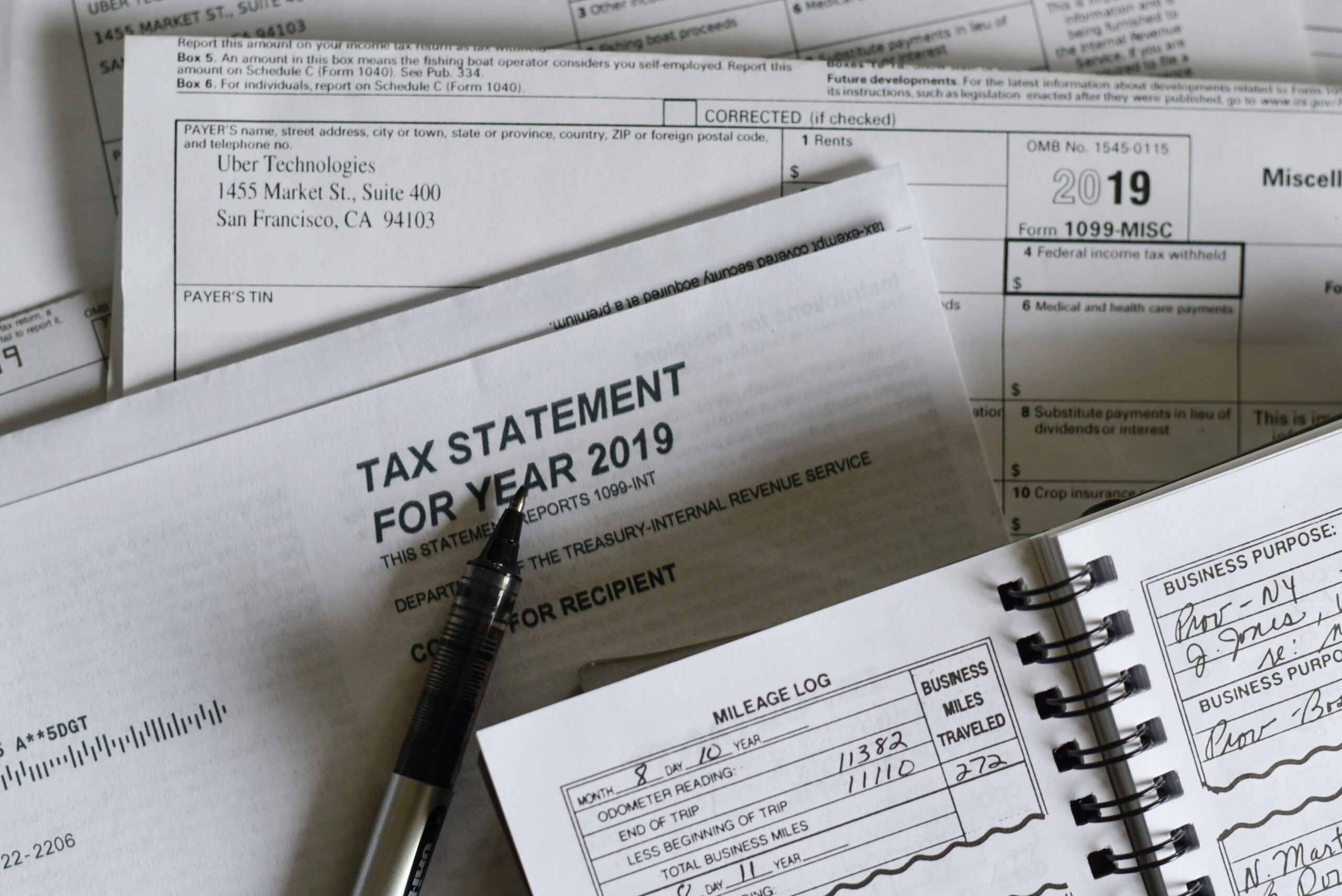
It’s April. HR sends an email: Please submit your investment declaration on the new Form 124 by Friday. You stare at it. You’ve been submitting Form 12BB every year since you started working. What is Form 124? Do you need different documents? Did you miss something?
You didn’t miss anything. But if you ignore that email — or just assume someone else will sort it — your employer deducts TDS (Tax Deducted at Source) from your salary as if you have zero investments, zero HRA (House Rent Allowance) claim, and zero housing loan interest. Every month. Until you file your ITR (Income Tax Return) and claim a refund, that’s money sitting with the government instead of in your account.
Form 124 has replaced Form 12BB from 1 April 2026 under the new Income Tax Act, 2025. It works the same way. The documents needed are largely the same. But a few things changed, and one of them — the landlord relationship requirement for HRA — will catch people off guard.
This article covers exactly what changed, what you need to fill Form 124 correctly, and what to do if you’ve already missed your HR’s deadline.
What This Article Covers
What Is Form 124?
Form 124 is the declaration you submit to your employer — not to the Income Tax Department — so that your employer can correctly calculate TDS on your salary.
Based on what you declare, your employer adjusts how much tax is deducted from your monthly salary. Less TDS means more in-hand salary throughout the year.
The legal basis: Form 124 is provided under Section 392(5)(b) of the Income-tax Act, 2025, read with Rule 205 of the Income-tax Rules, 2026. This is directly confirmed in the official FAQ document published by the Income Tax Department, Ministry of Finance, Government of India.
For context: what used to be Section 192 of the Income Tax Act, 1961 is now Section 392 of the Income Tax Act, 2025. Same purpose. New numbering. Same story with the form — 12BB became 124.
One more new term to get used to: the form now uses “Tax Year” instead of “Assessment Year.” For 2026–27, you’re in Tax Year 2026–27. Same period, different label.
Form 124 vs Form 12BB: What Changed and What Didn’t
| Feature | Form 12BB (Old) | Form 124 (New) |
| Governing Act | Income Tax Act, 1961 | Income Tax Act, 2025 |
| Section | Section 192 | Section 392(5)(b) |
| Rule | Rule 26C, IT Rules 1962 | Rule 205, IT Rules 2026 |
| Valid from | June 2016 | 1 April 2026 |
| Structure | Single document | Part A (employee details) + Part B (claims) |
| Landlord relationship disclosure | Not required | Mandatory for HRA claims |
| “Assessment Year” terminology | Used throughout | Replaced by “Tax Year” |
| Currency symbol | Rs. | ₹ |
| Standard deduction declaration | Employee declares it | Auto-applied — no declaration needed |
The practical changes boil down to two things. First: the form is now split into two parts (Part A for your personal details, Part B for your actual tax claims). Second: HRA claimants must now disclose their relationship with the landlord.
That second point matters more than it sounds. If you’ve been claiming HRA by paying rent to your parents, or to a sibling, you now have to say so in writing. The deduction is still valid — there’s no rule against paying rent to a family member if it’s a genuine arrangement. But you can’t leave that column blank anymore.
What You Can Declare in Form 124
Part B of the form covers four categories.
House Rent Allowance (HRA) Exemption
Declare the monthly and annual rent you pay, your landlord’s name and address, and — if your annual rent exceeds ₹1,00,000 — your landlord’s PAN (Permanent Account Number). You also declare your relationship with the landlord.
Documents: rent agreement and last 12 months’ rent receipts.
If you rent from a family member, confirm the arrangement is documented and the rent amount is reasonable. Paying ₹30,000/month to a parent and claiming the deduction requires an actual written agreement — not just an understanding.
Leave Travel Allowance (LTA) Exemption
For travel within India during leave, for up to two journeys in a four-year block. The current block runs 2026–2029. Documents: travel tickets and boarding passes for the journey claimed.
Interest on Housing Loan
Declare the lender’s name, address, and the interest paid or payable during the Tax Year. Supporting document: interest certificate from your bank or NBFC (Non-Banking Financial Company). This is usually available on net banking or by written request from your lender.
Investment and Expenditure Deductions (Chapter VIII-A and VIII-B)
This is the old Chapter VI-A from the 1961 Act, just renumbered under the 2025 Act. It covers the same familiar deductions:
- Up to ₹1.5 lakh in 80C-equivalent investments: PPF (Public Provident Fund), ELSS (Equity Linked Savings Scheme) mutual funds, LIC (Life Insurance Corporation) premiums, NSC (National Savings Certificate), home loan principal repayment, children’s tuition fees
- Up to ₹50,000 under 80CCD(1B)-equivalent for additional NPS (National Pension System) contributions
- Health insurance premiums — 80D-equivalent
- Education loan interest — 80E-equivalent
- Eligible donations — 80G-equivalent
Documents: relevant investment receipts, mutual fund statements, NPS contribution statement, insurance premium receipts.
Note: You do not need to declare the standard deduction of ₹75,000. The Income Tax Department confirms in its official Form 124 FAQ that the standard deduction is allowed automatically in every case — no form required.
Is Filing Form 124 Mandatory?
No. The official Income Tax Department FAQ is explicit: Form 124 is to be filed only if the employee wants their claims to be considered by the employer for TDS calculation.
But “not mandatory” and “doesn’t matter” are very different things.
If you don’t submit Form 124, your employer has no basis to reduce your TDS. They deduct tax on your full salary as if you’ve declared nothing. You get a refund when you file your ITR — but that refund can take several months. In the meantime, you’ve funded the government with your own money at zero interest.
There are no penalties for not submitting it. The only person who suffers is you — in the form of lower take-home pay every month until the refund arrives.
Submit it. It takes an hour, once a year.
Submitted Late — or Missed HR’s Deadline?
There’s no government-mandated deadline for Form 124. You can technically submit it any time during the Tax Year.
But the earlier you submit, the more months of correct TDS you benefit from.
Say your gross monthly salary is ₹1,00,000. Without any declaration, your employer deducts TDS assuming full taxable income (figures for illustration only — actual TDS depends on your regime, slab, and specific deductions). Submit Form 124 in April with your HRA, housing loan interest, and 80C investments declared, and your TDS adjusts across all 12 months. Submit in October, and you’ve already lost six months of the benefit — that excess TDS comes back only via ITR refund.
If you’ve missed HR’s internal deadline, submit anyway. Ask HR to adjust your TDS going forward. They can apply the revised calculation for the remaining months, even if they can’t revise the months already processed.
Changed Jobs This Year? Don’t Make This Mistake
Form 124 is not the only form you need when you change employers.
You also need to give your new employer Form 122 — details of income earned and TDS deducted by your previous employer. (Form 122 is the new version of what was previously handled via Form 12B under the 1961 Act.)
Without Form 122, your new employer doesn’t know you already earned ₹8 lakh at your previous company before joining them. They compute TDS as if your annualised salary from the new job is your only income. The result: either serious under-deduction (which triggers a tax demand notice — an official government communication that you owe unpaid tax for the year) or significant over-deduction.
Both are avoidable. Hand over both forms to your new HR desk in your first week.
Old Regime vs New Regime: Which One Makes Form 124 Relevant?
This is where a lot of salaried employees are confused since the new Act kicked in.
The new tax regime is now the default from Tax Year 2026–27. If you do nothing, your employer applies the new regime. Under the new regime, most deductions in Form 124 — your 80C investments, HRA, housing loan interest — don’t apply to TDS calculation.
If you want the old tax regime (where those deductions reduce your taxable income), you must explicitly tell your employer. The right way to do that is through your Form 124 declaration.
So:
- Old regime: Submit Form 124 with full declarations. It directly reduces your TDS.
- New regime: Form 124 is largely not relevant for investment deductions. HRA exemption is also not available under the new regime.
Documents Checklist Before You Fill Form 124
| What You’re Claiming | Documents to Keep Ready |
| HRA | Rent agreement, 12 months’ rent receipts, landlord PAN (if rent > ₹1 lakh/year), relationship with landlord |
| LTA | Travel tickets / boarding passes for the journey claimed |
| Housing loan interest | Bank/NBFC interest certificate for Tax Year 2026–27 |
| PPF | PPF passbook / annual statement |
| ELSS | Mutual fund account statement |
| LIC premium | Premium receipt for Tax Year 2026–27 |
| NPS contribution | NPS contribution statement |
| Health insurance | Premium receipt from insurer |
| Children’s tuition fees | Fee receipts from school / institution |
Don’t wait for HR’s reminder. Gather everything now. Most employers have internal cut-off dates — sometimes as early as November for final proof submission — even though the law has no deadline.
If you pay rent to a family member, ensure the rent agreement is in writing and the rent amount is realistic for your area. This is the most-scrutinised deduction category and the one most likely to be questioned if you’re ever picked up for tax scrutiny.
What to Do Right Now
- Decide your tax regime first. New regime = Form 124 has limited use. Old regime = fill every section carefully. If you haven’t decided, read the old vs new tax regime comparison and commit before you open Form 124.
- Gather your documents. Use the checklist above. Get your interest certificate, rent receipts, and investment proofs in one folder before you start filling anything.
- Get the form. Ask HR for your organisation’s Form 124 template (most use an HRMS portal). Or download the official format from the Income Tax Department website.
- Fill Part A. Your name, designation, address, PAN, and Tax Year 2026–27.
- Fill Part B. Go section by section: HRA first, then LTA, then housing loan interest, then investments. Use actual figures from your documents — don’t estimate.
- Submit with supporting documents. Keep a copy of everything you submit. You will need it when your employer processes Form 130 (the new Form 16, renamed under the 2025 Act) at year-end.
- If you changed jobs: Also submit Form 122 with previous employer’s income and TDS details to your current HR in your first week.
Related Reading on The Salary Investor
- How to Read Your Salary Slip: CTC, TDS, and Everything In Between
- Old vs New Tax Regime India 2025-26: Which One Actually Saves You More?
- HRA Exemption: How Salaried Employees Can Claim It Correctly
- Section 80C Tax Saving Guide: Claim the Full ₹1.5 Lakh Without Wasting Money
- VPF (Voluntary Provident Fund): The Hidden Tax-Free Investment Most Salaried Indians Miss
Disclaimer: This article is for general educational purposes only. All information is based on the Income-tax Act, 2025 and Income-tax Rules, 2026, as of June 2026. Tax laws and form requirements are subject to revision — always verify with the official Income Tax Department website (incometaxindia.gov.in) or consult a qualified Chartered Accountant (CA) or SEBI-registered financial advisor before taking any action.
Sources: Form No. 124 — Frequently Asked Questions (FAQ), Income Tax Department, Ministry of Finance, Government of India (March 2026) · FAQs and Guidance Notes on Forms as per Income-tax Rules, 2026, incometaxindia.gov.in (2026) · Form 124 Income Tax Act 2025 — Complete Guide for Salaried Employees, ClearTax (May 3, 2026) · Form 124: New Investment Declaration for Salaried Employees, TheMunim.com (May 4, 2026) · Section 392 TDS on Salary: New Rules from April 2026, FinLecture.in (April 28, 2026) · TDS and TCS Changes from 1 April 2026, ClearTax (April 29, 2026)

He figured out most of what he knows about personal finance not from courses or advisors, but from years of reading, making mistakes, and fixing them. The Salary Investor is his attempt to save other salaried Indians the same time and money.
He is not a CA or a SEBI-registered advisor. He writes as a fellow salaried person who has been in the trenches — navigating EPF, ITR, 80C, salary slips, and market volatility.
- Gratuity Before 5 Years: The Legal Reality vs What HR Tells You - September 20, 2026
- ESOP Taxation in India 2026: When You’re Taxed, How Much, and What to Do at Each Stage - August 20, 2026
- How to Claim HRA Exemption If You Pay Rent to Parents — The Complete Legal Guide - August 16, 2026