
How to Start Investing When Your Salary Is Under ₹5 Lakh a Year

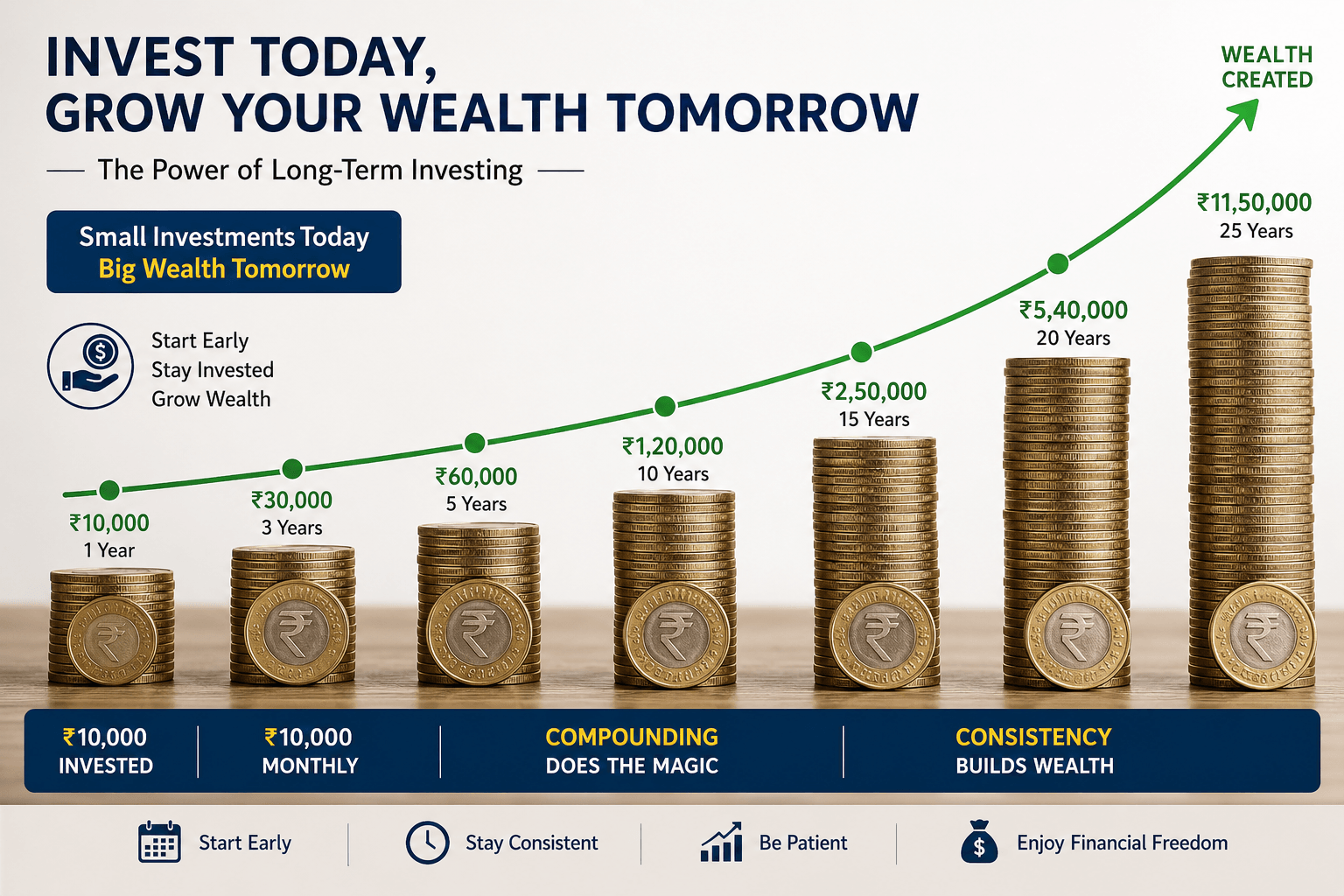
Let’s deal with the thing nobody says out loud: most investment advice in India is quietly written for people earning ₹10–15 lakh a year. The “just start a SIP of ₹10,000” crowd. The folks who can park ₹1.5 lakh in PPF before the first week of April without blinking. If that’s not you — if you’re earning ₹5 lakh or under — the standard advice can actually make you feel like investing is something you get to do later, once your salary improves.
Here’s the truth. Under ₹5 lakh a year means you take home somewhere between ₹33,000 and ₹38,000 a month after your Employee Provident Fund (EPF) deduction. It’s not a lot. Rent, groceries, travel, the occasional medical bill — these things don’t leave much breathing room. But ‘not much’ and ‘nothing’ are two very different things. This article is about the gap between those two words — and what you can actually do in it.
You pay zero income tax at this income level in 2026, thanks to the Section 87A rebate under the new tax regime. That’s one real advantage working in your favour. The question is what you do with the rest of what’s left.
What this article covers
What ₹5 Lakh a Year Actually Looks Like
Gross CTC of ₹5 lakh a year means a gross monthly salary of roughly ₹41,667. That’s before your employer deducts their statutory contributions. After your EPF deduction of 12% on basic salary (typically ₹15,000–20,000 for this salary range) and professional tax, your take-home lands somewhere between ₹35,000 and ₹38,000 a month — depending on how your employer structures the salary components.
Here’s what matters for tax: under the new regime in FY 2026-27, income up to ₹12.75 lakh is effectively tax-free for salaried individuals — ₹12 lakh via the Section 87A rebate plus ₹75,000 standard deduction. At ₹5 lakh CTC, you pay zero income tax. Your entire salary is yours to manage after EPF and professional tax. (Source: Income Tax Department / ClearTax, June 2026)
Now let’s talk about where that ₹36,000 actually goes.
| Expense | Monthly (Tier-2 city) | Monthly (Metro) |
| Rent (1BHK, shared or solo) | ₹6,000–₹12,000 | ₹12,000–₹20,000 |
| Groceries + household | ₹5,000–₹7,000 | ₹6,000–₹9,000 |
| Transport (commute) | ₹2,000–₹4,000 | ₹3,000–₹6,000 |
| Phone + internet + OTT | ₹1,000–₹1,500 | ₹1,200–₹2,000 |
| Misc (clothes, outings, medical) | ₹3,000–₹5,000 | ₹4,000–₹7,000 |
| Total estimated outgo | ₹17,000–₹29,500 | ₹26,200–₹44,000 |
| What’s left (take-home ₹36,000) | ₹6,500–₹19,000 | ₹0–₹9,800 |
The range in the ‘what’s left’ column is the point. If you’re in a metro and have high rent, this genuinely gets tight. But in a Tier-2 city, or if you’re living with family, or sharing a flat — you have a real surplus. Even ₹2,000 to ₹3,000 a month invested consistently from age 24 becomes something substantial by 40. We’ll show you the numbers.
Why People at This Income Level Don’t Invest — and Why Most Reasons Are Wrong
The most common reason salaried people at ₹5 lakh and under give for not investing: ‘I’ll start when I’m earning more.’ It sounds sensible. It’s actually one of the most expensive decisions you’ll make — not because of discipline, but because of compounding.
₹2,000 a month invested from age 24 at 12% CAGR (Compound Annual Growth Rate) grows to approximately ₹68 lakh by age 50. If you wait until 30 to start — still with the same ₹2,000 — you get to roughly ₹32 lakh. Six years costs you ₹36 lakh. The opportunity is not the money you invest. It is time.
The second most common reason: ‘Markets are risky, I might lose money.’ True — equity markets do fall. But three things counter this: one, you’re not putting your entire salary into equity. Two, a Systematic Investment Plan (SIP) through a diversified index fund, held for 10+ years, has never delivered negative returns in India on a 15-year rolling basis. Three, keeping money in a savings account at 3–4% while inflation runs at 5–6% is its own kind of loss. You’re just not watching it happen. (We’ve written about this:
Third reason: ‘I don’t understand how mutual funds work.’ Fair. That’s fixable in one afternoon. This article is a start.
The Four Investments That Actually Work at This Income Level
Not everything works at every income. Here are the four options that are realistic, low-entry, and genuinely useful when you’re earning under ₹5 lakh a year — and what each one does for you.
1. EPF — The Forced Savings You Already Have
If you work in a company with 20 or more employees, your Employee Provident Fund (EPF) contribution is automatic. You contribute 12% of your basic salary, your employer contributes another 12% (split between EPF and the Employees’ Pension Scheme, or EPS). The money earns 8.25% per annum for FY 2025-26, declared by the Employees’ Provident Fund Organisation (EPFO). Interest is tax-free. This is EEE — Exempt at contribution, Exempt on interest, Exempt on withdrawal. (EPFO notification, March 2026)
If your basic salary is ₹18,000, your EPF deduction is ₹2,160/month. Your employer adds another ₹2,160. Every month, ₹4,320 goes into a government-backed corpus at 8.25%. You don’t have to do anything except not withdraw it prematurely. Read more about common EPF mistakes:
One important thing: if you change jobs, transfer your EPF — don’t withdraw it. Withdrawing EPF before 5 years of continuous service makes the interest taxable and you lose the compounding benefit. For the step-by-step process:
2. PPF — The Voluntary Tax-Free Account Worth Opening
A Public Provident Fund (PPF) account can be opened at any SBI branch, post office, or through most private bank apps. Minimum contribution: ₹500 a year. Maximum: ₹1.5 lakh a year. Interest rate: 7.1% per annum for Q1 FY 2026-27, confirmed by the Ministry of Finance. Interest is tax-free and compounds annually.
At ₹5 lakh salary, even PPF contributions of ₹500–₹1,000 a month build a decent corpus over 15 years (which is the lock-in period, with partial withdrawal allowed after year 7). The real benefit is psychological as much as financial: it’s money that is structurally hard to touch, which means it actually stays invested. You can read about
If your employer offers the option, also check Voluntary Provident Fund (VPF). It lets you contribute more than the mandatory 12% to your EPF, at the same 8.25% rate — and most salaried Indians have never heard of it:
3. SIP in an Index Fund — The Simplest Equity Investment
A Systematic Investment Plan (SIP) lets you invest a fixed amount in a mutual fund every month. The minimum SIP amount across most fund houses is ₹500/month, and some schemes accept as little as ₹100. SEBI (the Securities and Exchange Board of India) mandates that mutual funds must offer a minimum investment of ₹100 for lump-sum and ₹500 for SIPs. (Source: SEBI regulations / AMC websites, April 2026)
For someone starting out with limited income, an index fund tracking the Nifty 50 is the right first step. It is low-cost — the expense ratio (annual fee) is typically 0.05–0.20% for a direct plan — and it gives you exposure to India’s 50 largest companies in one instrument. You don’t need to pick stocks. You don’t need to follow quarterly results. You invest monthly, and the market does what markets do over 10+ years. For a deeper look at why index funds suit beginners:
On the Total Expense Ratio (TER) — the annual fee charged by the fund — always choose the direct plan over a regular plan. Regular plans pay commission to your distributor; direct plans don’t. On a 10-year SIP, that 0.5–1% difference in TER compounds into a significant gap in final corpus. We’ve explained this in detail:
4. Emergency Fund — Before Any of the Above
This is not an investment. It is a financial shock absorber. Three to six months of expenses, sitting in a savings account or a liquid fund, doing nothing dramatic — just being there. If your monthly expenses are ₹22,000, your emergency fund target is ₹66,000–₹1,32,000.
The reason this comes first: if you start a SIP without an emergency fund and your phone dies or you need dental work, you’ll break the SIP to cover it. Then you’ll feel bad about breaking the SIP. Then you’ll delay restarting. The emergency fund is what makes the SIP sustainable. Read more about how much to keep and where:
Comparison: Which Option Does What
| Investment | Return (2026) | Risk | Lock-in | Min. to Start | Best For |
| EPF | 8.25% p.a. (tax-free) | Nil (govt-backed) | Till retirement (5 yrs for tax-free withdrawal) | Automatic (12% basic) | Retirement corpus — mandatory baseline |
| PPF | 7.1% p.a. (tax-free) | Nil (govt-backed) | 15 years (partial from Year 7) | ₹500/year | Safe long-term savings, tax benefit under old regime |
| Index Fund SIP (Nifty 50) | 10–13% CAGR (historical, not guaranteed) | Moderate–High (equity) | Nil (but stay 10+ years) | ₹500/month | Wealth building over 10–20 years |
| Liquid Fund / Savings Account | 6.5–7.5% p.a. (liquid fund) / 3–4% (savings) | Very Low | Nil | ₹500 (liquid fund) | Emergency fund, short-term parking |
Source: EPF interest rate — EPFO notification FY 2025-26. PPF rate — Ministry of Finance Q1 FY 2026-27. Index fund historical CAGR — AMFI data, Value Research (15-year rolling return Nifty 50). Liquid fund returns are indicative, not guaranteed.
A Real Starting Portfolio for ₹35,000–₹38,000 Take-Home
Let’s use ₹36,000/month as the take-home. Monthly expenses in a Tier-2 city: ₹22,000 (rent shared, groceries, transport, phone). That leaves ₹14,000. Here’s how to actually split it:
| Where It Goes | Monthly Amount | Purpose |
| EPF (already deducted) | ~₹2,160 (automatic) | Retirement corpus — already happening |
| Emergency fund (build first) | ₹4,000–₹5,000 (for 12–15 months, then redirect) | Target: 3 months expenses = ₹66,000 |
| PPF (voluntary) | ₹1,000 | Safe, tax-free long-term savings |
| SIP — Nifty 50 Index Fund | ₹1,500–₹2,000 | Equity growth over 10+ years |
| Kept liquid (for irregular expenses) | ₹3,000–₹5,000 | Medical, festival, phone repair, etc. |
This is not an aspiration board. This is what ₹36,000 can actually accommodate — modestly but realistically. The SIP of ₹1,500/month at 12% CAGR grows to approximately ₹29 lakh over 20 years. The PPF of ₹1,000/month over 15 years at 7.1% grows to approximately ₹3.6 lakh. Neither number will retire you alone. But combined with EPF, VPF additions when salary rises, and step-up SIPs as your income grows, the foundation is being built — quietly, automatically, while you live your life.
On step-up SIPs: even increasing your SIP by ₹500 each year makes a material difference. A ₹1,500 SIP stepped up by ₹500 per year for 15 years outperforms a flat ₹3,000 SIP over the same period. We’ve covered the math here:
What to Do This Week
- Check your EPF balance. Log in to the EPFO Unified Member Portal (unifiedportal-mem.epfindia.gov.in) with your Universal Account Number (UAN) and confirm your contributions are going in correctly. If you’ve changed jobs before and have old EPF accounts, initiate a transfer online.
- Open a PPF account this week. If you bank with SBI, HDFC, or ICICI, you can open a PPF account online through net banking — it takes under 15 minutes. Set a standing instruction for ₹500–₹1,000/month on the 5th of each month (before the 5th ensures that month’s interest is counted on the full balance).
- Start an emergency fund in a liquid fund or high-yield savings account. HDFC Liquid Fund or SBI Liquid Fund can be started on the Groww or Zerodha Coin app with ₹500. Set a goal: ₹66,000 (3 months expenses). Park ₹4,000–₹5,000 per month until you hit it, then redirect that amount into your SIP.
- Start a SIP in a direct Nifty 50 index fund. Use Groww, Zerodha Coin, or MF Central (mfcentral.in — the official AMFI portal). Search for ‘UTI Nifty 50 Index Fund Direct Growth’ or ‘Nippon India Index Fund Nifty 50 Direct Growth’. Set a SIP for ₹500 to start. You can always increase it. Just start it this week.
- Read your salary slip once. Understand what’s being deducted, what your basic salary is, and whether your EPF is being calculated on the full basic or just ₹15,000. Knowing this takes 20 minutes and changes how clearly you see your money. Here’s a guide:
Related Reading on The Salary Investor
- SIP vs PPF — Which is Better for Salaried Indians?
- EPF Mistakes That Are Silently Costing Salaried Employees
- How to Invest ₹10,000 a Month in India — A Beginner’s Portfolio
- The Real Cost of Not Investing Your Salary
- SEBI’s Salary-to-Mutual Fund Proposal: What It Means for Your Payslip
Disclaimer: All data in this article is sourced from EPFO, the Ministry of Finance, SEBI, AMFI, and publicly available financial publications as of June 2026. Returns mentioned for mutual funds are historical and are not a guarantee of future performance. Market-linked investments are subject to risk. The information provided is for general financial education only and should not be construed as personalised investment advice. Please consult a SEBI-registered investment advisor or a qualified Chartered Accountant (CA) before making investment decisions.
Sources: EPF Interest Rate FY 2025-26 — EPFO / ClearTax, March 2026 · PPF Interest Rate Q1 FY 2026-27 — Bajaj Finserv / Ministry of Finance, June 2026 · Income Tax Slabs and Section 87A Rebate FY 2026-27 — ClearTax, June 2026 · Minimum SIP Investment in Mutual Funds — SEBI regulations / 5paisa, 2026 · PF Contribution Rate 2026 — SalaryBox, May 2026 · Cost of Living in India 2026 — CostOfLivingIndia.com / GoDigit, 2026

He figured out most of what he knows about personal finance not from courses or advisors, but from years of reading, making mistakes, and fixing them. The Salary Investor is his attempt to save other salaried Indians the same time and money.
He is not a CA or a SEBI-registered advisor. He writes as a fellow salaried person who has been in the trenches — navigating EPF, ITR, 80C, salary slips, and market volatility.
- Gratuity Before 5 Years: The Legal Reality vs What HR Tells You - September 20, 2026
- ESOP Taxation in India 2026: When You’re Taxed, How Much, and What to Do at Each Stage - August 20, 2026
- How to Claim HRA Exemption If You Pay Rent to Parents — The Complete Legal Guide - August 16, 2026